• Home
  • About
  • Sneak Peek
  • Buy The Book!
  • From The Archives
  • Contact
Policing Muses:

From The Archives

Titillations from the past for the book & Blog

Categories

All
1800 1900
1800-1900
1900 Present
1900-Present
Court Cases
Minorities
Performers
Press Coverage
Sex Workers

Author

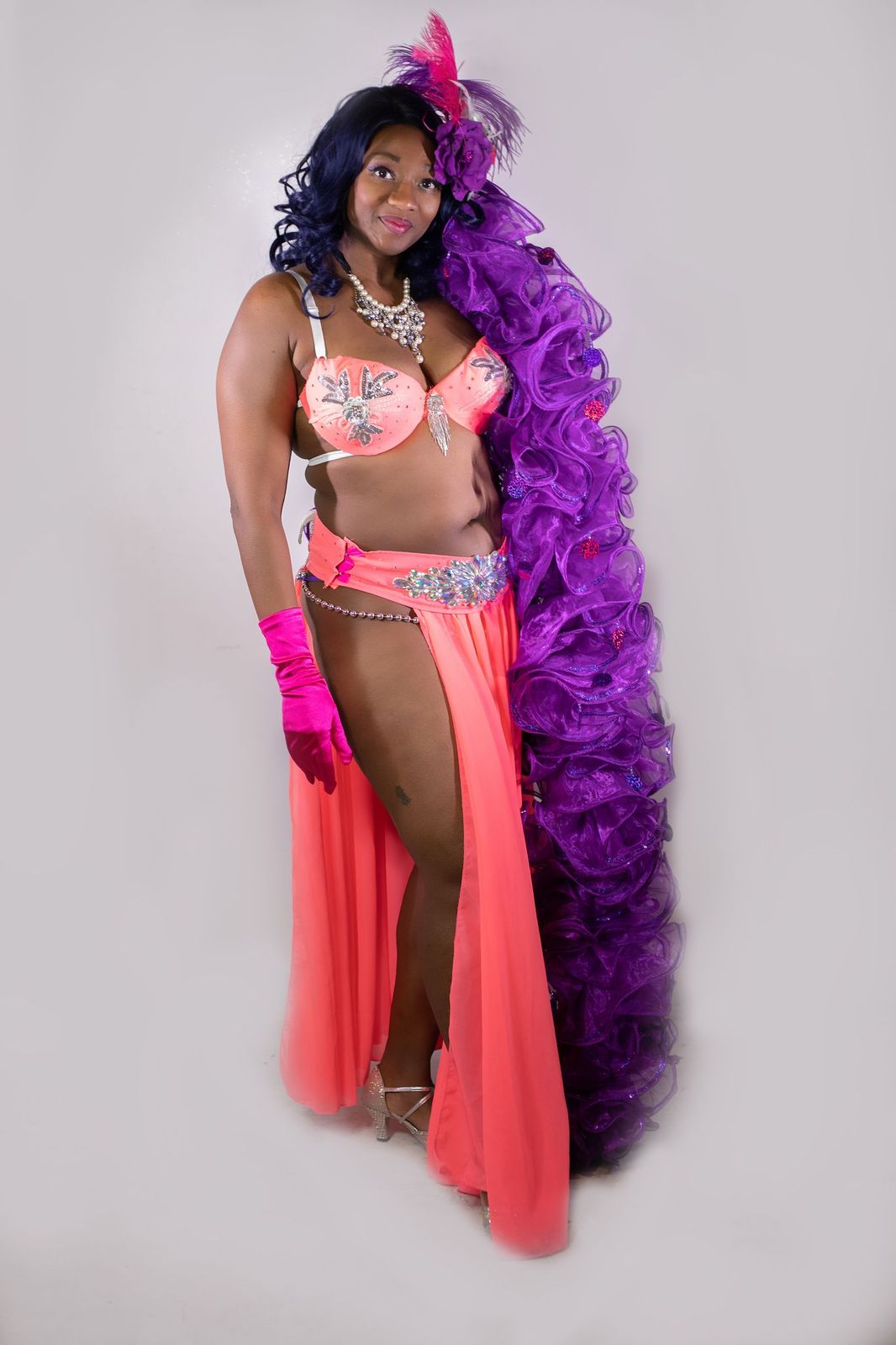
Lady Mekaella received a humanities certificates from both Harvard & The Smithsonian Institute, while topless with a bottle of wine and a cat in her lap. She's a traveling showgirl known as Florida's Naked Nerd.  She's now working on her second certification class for historians from Harvard via online classes during Covid19 shutdowns.

"What, Like It's Hard?" - Elle Woods
World's Faire Not So Fair, for showgirls arrested

7/22/2020

1 Comment

 
Picture
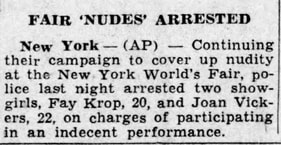
In the very early 20th century two things drew spectacle: The New York World's Fair & scandal in the press.  The World's Fair was the height of excitement featuring exhibitions and showcases in the international eye, including vaudeville acts, particularly burlesque. From Sally Rands famous fan dance to the belly dancing of “Little Egypt.” (Sally Rand herself was arrested for her fandance at the Chicago world's fair in 1933 herself, but tonight we are in New York. )
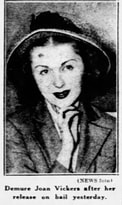
But over zealous censors really had it out for the entertainment area of the New York World's Fair, which resulted in multiple raids. Including Joan Vickers & Fay Krop, two showgirls arrested backstage during their performance at "Congress of Beauty" & the popular "frozen alive" show.  The reason for the raid in the first place? Inspector Mooney was sent by Mayor LaGuardia, upon the requests of religious leaders who had attended past performances and where so offended by entertaining women in both sets of acts that they wrote letters., demanding action.  The Rev. George Drew Egbert (yes, Egbert, even his name sounds like his life is so dull and drab he goes LOOKING for art to silence for sport. One can assume if he didn't have the hobby of censoring women he'd have the DMV for a personality) wrote that he found the burlesque acts "disgustingly revolting" after himself and another Minister went actively looking for nudity on Thursday night and witnessed the frivolity and fun of vaudeville. This resulted in the women being arrested for indecent exposure Monday during a weekday performance. ​

Picture
This resulted in some papers printing the addresses and real names of the showgirls, an unfortunate common practice at the time, placing them in potential danger. Both women where released on bail, so when they returned to performing it resulted in large crowds and continued bookings. 
But the press also resulted in getting License Commissioner Paul Moss involved and aiding for the performances to continue, in which he and a judge attended a show to see if it violated the law. Suggestions for minor changes where made, but the productions where approved to resume with those changes, a brand new license to produce each act for the businessmen in charge and the girls could get back to work.  Joan with her fan dancing act, and Fay could throw back on her g-string and hop back into the ice. Both showgirls had a bail of $500. Today that would be $9,273.27 a total of $18,546.55. 
81 years later, we thank Fay & Joan for their nights in jail, their tolerance of police interference, & their bravery for what we have as showgirls today. One can only hope that ones "released on bail" press photo can be as sassy as theirs.  
1 Comment

“There is a price that you may pay for your art”

7/18/2020

0 Comments


Lottie Ellington,
Virginia’s Infamous “Twerking Teacher”
A Contemporary Burlesque Interview

Often we assume the censoring of women's bodies in burlesque is of days gone by, but in my book & research I have  personally interviewed plenty of currently working showgirls & showpersons to display a contemporary glimpse at the current environment we dance in, whether in burlesque or stripclubs, and the stigma and issues we face, and what we pay to be our true selves in the industry. 
Bellow is an excerpt from an interview with Lottie Ellington:
Picture
With big doe eyes, and an even bigger smile, Lottie Ellington has been dancing since she was 4. She has studied jazz, hoop dance, hip hop dance, fan dance, Congolese dance, ballroom dance and belly dance.In her college years She had tried Stripclub work with her classmates & bandmates, but ultimately decided it was not for her, years later Burlesque was the alternative that was a perfect fit instead. She also is a lifelong 5th generation teacher & founder of the Ellington Academy of Burlesque. She is well known for her comedic acts and nerdlesque parodies with fringe & sparkle. But what she is most infamous for is her perseverance when an injustice was committed against her. 
On april 15th of 2011, Lottie entered the (now closed) Richmond Institute of Burlesque. She pursued multiple drop in classes, soaking up as much information as she could for a hobby in her offtime as an educator at a local school. When one had taken enough drop in classes, one could perform in the recital. Lottie flourished with her natural abilities and is quickly coming onto her Decade in Burlesque Anniversary, a milestone many showgirls do not reach before they drop out or leave it behind as a brief hobby. “I really kinda I just figured I would do this once or twice, and that would be it.” Lottie said smiling. It was fun, she could express herself in an art, in her own time, just for her. But how did the Internet come to know her as The Twerking Teacher? It happened five years into her showgirling timeline, in spite of being very vigilant and ever conscious of keeping her “Muggle Life” and her entertaining life very seperate. The stigma against women in the arts having bodily agency as a form of free expression, even in modernity, is heavily watched and instilled, twice fold for educators of the youth, thrice fold for women of colour.  “There was some dust up in my local burlesque community., “ She started to explain about the beginning of the turn of events in Richmond,  “Regarding race, and I kind of spoke up, I'm an older performer & I don't have, like, a thing to lose. I didn't think I had anything to lose….” She did the emotional labour a lot of women of colour in vaudeville are doing recently, when addressing problematic things said in local industries. Modern Burlesque is supposed to be a safe space for female and femme presenting humans to be in an artistic community within the industry. This is not always the case and call ins & call outs do not always have mutually respected results. “so I was like, ‘Hey, this is not OK. Don't do this. We need to find something else to do with yourself in your time other than make racial posts about other people's ethnicity.’ And apparently that hurt someone's feelings.” an admirer of the colleague she was trying to help educate took their energy and instead channeled into an anonymous email sent to the school board a link to a video from the 2014 Michigan Burlesque Festival. It received more than 7,500 views and the town flooded with controversy, ostracising a confident & educated woman who dared to have an expressive artistic side. It did not fit the perfect myth of what a teacher, a woman, was allowed to be. This went viral as parents demanded her to be fired. The press spread so far as to Lottie waking up to see her showgirl persona images on Yahoo homepage as a news article.She was forced to resign.But Lottie took it in stride; “one of the many news articles that was written on it, the headline was "Parents Say Fire Twerking Teacher." And that's kind of how it stuck.'' Usually in vaudeville, burlesque in particular, a performer has a tagline for flyers and when emcees introduce them to follow their stage name. Taglines are often given by peers, mentors, masters of ceremonies, or even well self curated for marketing plans when thinking of oneself as a brand as well as an artist. But in some cases, rarely, one can get it from a press review. But Lottie, got hers from a headline. “well, I didn't get to pick my tag line, and no one that I admire gave me my tag line; legitimately, a newspaper, a journalists gave me my tag line.” Her resilience to move forward another five years in burlesque with this new tagline was admirable. She resigned from her Highschool teaching position unfortunately. “it's set and it definitely sucks. But, you know, things. Everything happens for a reason. And again, it kind of gave me a chance To kind of just step out of my comfort zone and do something else. Because ultimately, it's like all. Well, you still have you're not teaching anymore, but you still have credentials. So put your credentials to use in a different way.” She said, during 2020, the year she announced her new academy that will usher in a new generation of performers. I was honoured to listen before we tackled discussing the Body Policing and legalities of the local burlesque scene. 
Where most cities or counties feature Blue Laws and are generally enforced by regular uniformed police department officers, Richmond has “ABC Agents.” ABC stands for Alcohol Beverage Control. Lottie had already experienced an ABC situation up close and personal. She was working as a door girl at a recital for burlesque school she was learning from. An ABC agent came in and was prepared to shut the production down. “The producers were able to kind of talk them down, ‘Oh no please we are almost done, that, you know, just let us finish. This is a recital. Let them finish’” Lottie recalled, “And they said, ‘we'll let you finish, but this is it.’ And they talk to be owner of the venue and then told them that they know they weren't licensed for this.” The ABC agent threatened that the venue could lose their license over having burlesque performers dance in their venue. Where a thriving burlesque scene had sprung up in various bars, to which Lottie described as the WIld WIld West at the time, suddenly doors were closing to performers and producers. “Then after that, no one was willing to do it. So we were literally just relegated to only the Theatres and art galleries” Lottie remembered, as spaces for performances ran dry, and previous relationships producers and teachers had developed with venue owners quietly became standstills. “So that was that was it. So if there was a theater that would allow you to come in and you could do it, then. And if it was an art gallery, you could do it. But if it was this that you couldn't do any. Couldn't do bars. Couldn't do restaurant. And law didn't specifically say you couldn't. But no one was willing to take that chance at that time.” But both theatres and art galleries are expensive to rent and arrange a performance in, which meant only some could move forward with having their art seen. Which created more potential for imbalance of who got to grow and develop skills as burlesque artists and who did not. But this also showed who could be ingenuitive and who had creativity and drive to research the laws, adjust their performances, and persevere. In some areas of Virginia you couldn’t be seen in some types of venues taking your clothes off, so one asks “How Does One EVEN DO BURLESQUE Without Taking Clothes Off?” Lottie was strategic, and even used a classic burlesque solution from eras gone by, “So then you have to kind of work around the rules and say, ‘OK, well, you can't be seen taking off clothes. So here's a screen. You can go behind the screen. Take off your clothes or you don't wear clothes and you do like a balloon pop. Because those aren't clothing. those aren't clothes” Balloons are not clothes. The Balloon pop act is a classic work around, a legal loophole with purpose. “That was interesting because you kind of see a lot of novelty acts and you think ‘oh god, a balloon pop. So cute.’ But then you find out later, ‘oh, there is not a balloon pop for the sake of balloon pop.’ It's a balloon pop because you can't STRIP. And so that's the way of getting around the whole not being able to strip.” 
  ABC Agents while not police officers, they still carry a badge and they can make arrests, according to Lottie, which incurs an additional stress upon POC performers. Any arrest of a person of colour has high risk. The amount of POC who experience brutality, abuse and even death while in custody or pre custody of police is alarming. “Black bodies are already heavily enforced and policed. So now you put on top of this. You know, again, this black body that is in these degrees of being naked. And this becomes a huge issue. Again, Paris Hilton has a nip slip on the on the red carpet, and no one batted an eye, Janet Jackson had a nip slip at the Super Bowl & it was like, It was career ending for her.” She explained “You have to understand that there is a price that you may pay for your art. And that the the rules may not be, you know, are not always equally. The consequences and the rules, the rules may not be equally applied. And I think for POCs we noticed the harder part is trying to get allies and counterparts to grasp that concept. So instead of "you can you know, we've been doing this burlesque thing at this venue for a long time." Well, have you ever done it with the person of color at the venue? No. OK, well, then you might want to check on that because. You've been getting away with it for all of this time and no one said anything, but if I do it, I might go to jail.” A risk that she’s been taking over and over for almost a decade. Which caused Lottie to be extra vigilant about her art and costuming, filtering a lot of what she does to adjust to the risk, while still pushing the envelope. “Again, this is part of living in America is having to police yourself so that other people don't have the opportunity to police you. Where to minimize how much other people have to feel like they need to, Police you, because you're already trying to be on point. I've got to make sure that my butt doesn't fall out of my shorts, even though my butt falls out of all of my shorts, out of ALL the shorts. Because this is an ABC agent at the venue, then I've got to be extra careful.”
     “So they can arrest you. And they have a badge. And they come again, they come in sort of. Flex their muscles. You know, occasionally.” But Lottie says that she is seeing improvements over the last few years with less interference from this strange body of authority. Even venues have started to edge quietly back to being open to having burlesque return to their spaces. “Things have definitely opened up more.” Lottie said, “more and more venues are willing to take a chance.So that was a wonderful change to see happen in comparison to when I first started, where the ABC agents came in and literally just shut everything down.”
And now she is a leader in a community within an industry still going strong. She will be using her skills as a teacher to be an educator for the Ellington School of Burlesque, The Twerking Teacher still inspiring with a fighting spirit, a scholar of sparkle. 

To read more about Lottie, her contemporary Colleagues, And the living and passed legends who came before us to trail blaze, stay tuned for the release of Policing Muses available at Barnes & Noble this fall!
0 Comments

The Knees of Gaby Deslys!

5/29/2020

0 Comments

 
Picture
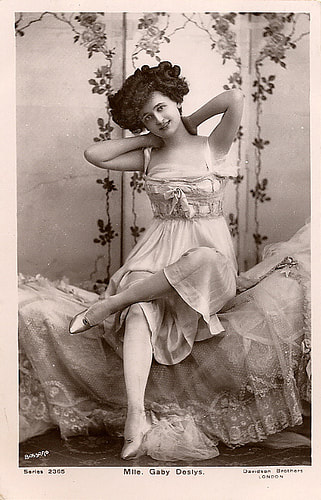
Gaby Deslys was a  vaudeville performer and actress most popular in the 1910’s. Her French stage name is a contraction of Gabrielle of the Lillies. Her success in Europe lead to her making later $4,000 a week in the United States alone. But how she got to this success was not without scandal and men telling her what she could and could not do with her body and her visibility onstage. Born in France in the 1881, She made her debut onstage 9 October 1902 as a chorus girl in Y a des Surprises. She quickly rose up into celebrity. Gaby left Paris in August of 1906 to fulfill a three-month contract with the Gaiety Theatre, after catching they eyes of George Grossmith, Jr. and, more importantly, his friend George Edwardes, who owned the Gaiety and scooped her up as talent for his venue as well as his own personal interests. Her rise to stardom had her gracing the stages of the Shubert Theatre in America & even back again to Paris for The Moulin Rouge. But imagine doing your job, being a woman in showbusiness, just doing your best in your career in Europe, paying your bills and creating art, and then meet the eras all white male equivalent of  the Westboro protestors picket lining your shows, over the fact they could see your knees onstage. This is what happened to Gaby in 1913. Her life and shows were interrupted by a group of English clergymen protesting her performance at the Palace Theatre. So concerned about her knees, a representative of this group of priests & the Bishop of Kensington stomped into the offices of The Lord Chamberlain about the performance demanding the show close. “A La Carte” was such a scandal it was all the papers could talk about in November & October of 1913 for London. In fact, the same newspaper we read online in news apps today for political and social news, The Guardian, is the same newspaper that broke this story of riled up priests crying INDECENT over a showgirls knees. The production had already passed The Censor, a rigorous system that was in charge of what shows in Londons theatres could go onstage before the public IF they followed morality codes. The Manager of the Palace theatre at the time, Mr Alfred Butt (What a missed opportunity for a burlesque career with that name, sir!) claimed to the press that the production had already been going on for eight weeks straight without complaint. But this group of clergymen where determined to have it taken down and hold Gaby accountable for her visible knees and indecentness of the scene she performed. One reporter even gave us details of the scene in which Gaby powders her knees, as part of a story in a setting; “The vision of Mdile. Gaby Deslys in her dressing room was originally in the third scene”  as “Purely a piece of high spirited tomfoolery.” after weeks of performances the clergymen demanded the Lord chamberlain to remove their licence to operate, essentially shutting down their show, putting Gaby & the hundred or so people involved in the production out of work for the rest of the contracted season. The Lord Chamberlain sent a few representatives of his department to see the show and discuss it with those involved. Both Gaby & a reverend, A.J. Waldron where interviewed towards the end of the debate. Ever the clever girl and skilled actress, Gaby had found a way to appeal to the representative of her oppressors, Rev. Waldron. She met with him on October 23rd and talked to him personally, charming him around the fact that she was a good girl, and he hadn’t even seen her production. Mr. Waldron seemed delight and won over, stating that she even showed him a crucifix she wore around her neck telling him “I’m a good girl, i was brought up in a convent, The last thing I want to do is be inmodest.” and so when the Lord chamberlain declared on October 24th that “The Matter was Closes” Reverand Waldron was not mad about it, and let it be. WHile other clergymen seemed disgruntled to be beaten. But Gaby could resume her show after two months of scandal and dragged out stress of the situation. When Interviewed with the Press during this victory she said “My performance is not in the least suggestive. It is simply an irresponsible gambol- a little roguish romp.” Her parisian knees had a solid leg to stand on in this victory. 
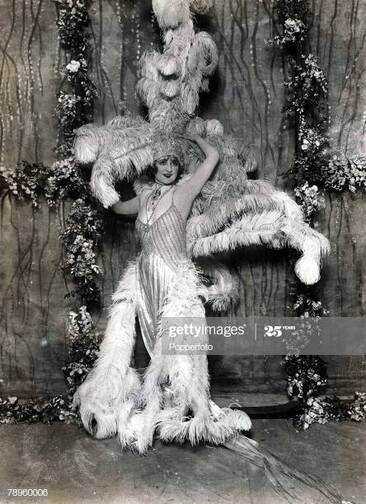
But it wasn’t the last time what she wore got her in the press. In 1919, the famous artist Erté began work with Gaby on her costumes, including the Harem Pants. This eastern inspired look was for her appearance in the production of "Les Rois des Legendes." Women wearing pants was a upraising of eyebrows and scandal within itself, and her gold threaded versions where no exception. Both Gaby & Erté knew that this type of press resulted in ticket sales and fame that was more beneficial than career ending, they rode this out as well to much success. In fact, thanks to his costumer beginnings with the showgirl, Erté would later be called the father of the ‘Art Deco’ movement. He later became a huge feature in Harper's Bazaar & Vogue. Who knew little ruckus for womens agency could be so chic that you could have a career around it?
​

Picture
For more information on showgirls bodies being scandalized, read Policing Muses, available in hardback and paperback and ebook the fall of 2020!
0 Comments

Rosa, Poor Rosa.

5/11/2020

0 Comments

 
Picture

Snippet from a chapter
"The hypocrisy here came at great costs to women alone, outside of jail time: the death of one's dignity, respectability, societal place and freedom in participating in the sartorial pleasures of art and fashion that men experienced. Throughout history we note over and over again that males and male presenting person's did not pay this price. And often a heartbreaking price paid was the passions or creative interest of a woman or her potential; 

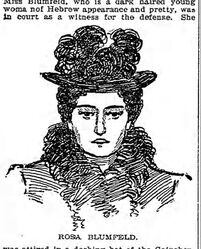
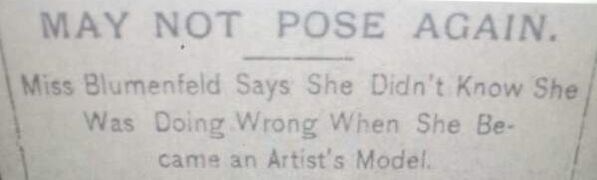
The press in 1896 clamored around Rosa Blumenfeld as she was arrested at the request of her own father in a case of indecent exposure for merely posing nude for artists. It was her first time modeling. From the New York Journal to the Morning Herald of Kentucky Press described her looks, her fashions she wore in court, to describing her tears, her address was even listed. But nothing was said of the artists that had booked her and used her. They were not criticized nor described. She was only 19 or 20(research results were inconsistent.) One reporter wrote Rosa was “a rather pretty girl with a graceful figure” but nothing about her father or the artists involved. Reported claimed the art made of her that she posed for “TOO inappropriate to describe” thus causing more sense of shame around such an trivial thing we look at today as posing for artists. With tears in her eyes reporters quoted her telling the court “Had I known that I was doing such a horrible thing when i posed...I should have never had done so”
When the press demanded to know if she would model again, it’s recorded that she hung her head and hesitated. When she raised her head she said “That is a question I can not answer. I have already received many letters from artists in this city, New York, and nearby towns, to pose. But all of these letters I have destroyed so you see it is very likely that I may never do so again.” This must have been devastating. Your first time posing, feeling confident, contributing to art before the turn of the century, full of hope and excitement. Only to be arrested at the demand of your own father, harassed by the press, and then destroy the letters that could have meant a successful career of bookings. I imagine her there at night, burning the letters to keep from her father and his misogynistic rage, tears in her eyes. A muse pulled from the sky once she learned she had wings.
And if this had been a predatory situation, male artists praying upon unsuspecting and inexperienced young women wanting to be models, then this was just another case of the age old victim shaming. Holding her accountable for the sins of men who put themselves in positions of authority. With no safety nor solace within her own family, while her father punished her for the sake of preserving his name.

Another factor is to take into account of antisemitism. One article was even as bold to describe her clothes as “costly” in a negative tone in the same breath as saying she was of Hebrew heritage. 
Upon finding these articles I was filled with such a boiling sense of injustice and relatability i had nearly thrown my laptop across the room. Once again we were denied the potential of art and the potential of this young woman as a form of artist herself, even as a model, because of the ideals of “Morality” around womens bodies. We gaze at art in museums all day long, but what of the anonymous women who posed for them and what did they experience in exchange? 

Picture
To read and learn more then buy a copy of "Policing Muses" available this fall!
0 Comments

    RSS Feed

    Archives

    January 2021
    July 2020
    May 2020

Proudly powered by Weebly
  • Home
  • About
  • Sneak Peek
  • Buy The Book!
  • From The Archives
  • Contact